


Llandudno is one of the more genuinely accessible seaside towns in the United Kingdom, and unlike many resorts that have retrofitted accessibility as an afterthought, much of Llandudno’s accessibility comes directly from decisions made when the town was originally planned in the 1850s. The promenade was built flat and wide from the outset, which makes it considerably easier to navigate today than most British seafronts if you use a wheelchair, a mobility scooter, or simply find walking difficult over long distances. This guide goes through what to expect in detail, covering the promenade itself, the Great Orme, parking, facilities, the beach, and accommodation at hotel llandudno.
Why Llandudno’s Layout Helps
To understand why Llandudno works well for accessible travel, it helps to know a little about how the town came to exist. Unlike most seaside resorts, which grew up gradually around old fishing villages with narrow, steep, and irregular streets, Llandudno was laid out in a single deliberate plan from 1849 onward by architect Owen Williams, working for the Mostyn family who owned the land. The result is a grid pattern with wide, flat streets and a long, level promenade rather than the cramped and uneven layout typical of older coastal towns. This single planning decision from over 170 years ago is the main reason the town remains comparatively easy to navigate today.
Getting Around the Promenade
The promenade itself runs for roughly two miles, from the pier at one end to the West Shore at the other, and it is flat for almost its entire length. Benches are placed at frequent intervals, which matters if you need to rest regularly over a longer walk, and there are dropped kerbs at several points where the promenade meets the beach. This is a notable contrast with many other Victorian seaside towns, a good number of which were built with steps, steep ramps, or narrow approaches down to the sand, since accessibility was never a design consideration at the time they were built. Llandudno’s flat grid layout means these barriers are far less common here than in comparable resorts.
That said, it is worth noting that individual shops, cafés, and older buildings along the promenade vary considerably in their own accessibility, since shopfronts and entrances were not standardized in the same way the streets themselves were. It is always worth checking ahead with specific venues if step free entry to an individual building is essential for your visit.
Reaching the Great Orme Without Climbing It
The Great Orme, the headland that dominates views across the whole town, does not require walking or climbing to reach the summit, which is significant given how central it is to the Llandudno experience. Two heritage transport options exist, along with a fully drivable road.
The Great Orme Cable Car is the longest passenger cable car route in the United Kingdom, running from Happy Valley near the pier all the way to the summit. Cabin space on cable cars of this era is generally compact, so it is worth checking current accessibility provisions for wheelchair users directly with the operator before traveling, since specific arrangements can vary by cabin and by season.
The Great Orme Tramway offers an alternative route to the summit, running in two stages as a genuine Victorian funicular railway. As with many heritage rail systems, accessibility varies by carriage and by station, and some carriages and stations do have step free access while others may not, so again it is worth confirming current provisions directly rather than assuming based on general expectations of what a tram service offers.
For guaranteed full access regardless of mobility equipment, Marine Drive is the most reliable option. This is a toll road that circles the lower section of the Great Orme at a lower level than the summit, and it can be driven in an ordinary car, giving access to genuinely dramatic coastal views without needing either the tram or the cable car at all. For visitors who want to experience the scale and drama of the Orme without depending on heritage transport accessibility, this is generally the safest route to plan around.
Parking
Several seafront car parks in Llandudno have marked disabled bays positioned close to the promenade itself, which matters given how much of the town’s appeal lies directly on the seafront. On street Blue Badge parking is also widely available along much of the promenade outside of peak season restrictions, giving more flexibility than relying solely on car parks. Venue Cymru, the town’s main conference, concert, and events venue, also has dedicated accessible parking directly outside its main entrance, which is worth knowing if your visit coincides with an event there.
Toilets and Facilities
Public accessible toilets operating on the RADAR key national scheme are located at intervals along the promenade and near the pier entrance. It is worth carrying a RADAR key with you if you already have one from previous travel, since some of these facilities operate on the national scheme rather than being open access to the general public. If you do not already have a key, they can generally be obtained in advance from disability organizations before you travel.
Beach Access
The North Shore, Llandudno’s main beach, has a relatively gentle and level approach from the promenade at several points along its length, which is an improvement on many British beaches where reaching the sand at all can be a significant obstacle. That said, the beach itself is shingle backed with proper sand further down toward the waterline, meaning a standard wheelchair is likely to struggle once you are off the promenade and onto the beach surface itself. A beach wheelchair or an all terrain mobility scooter is a considerably better option for actually reaching the sand rather than just the promenade edge of the beach. It is worth checking directly with the local tourist information centre or council for current beach wheelchair loan schemes, since several Welsh coastal towns now operate these on a seasonal basis and availability can change year to year.
Accommodation Considerations
When booking accommodation in Llandudno with accessibility in mind, a few specific details matter more than general star ratings or reviews.
Lift access is the single most important factor to confirm directly, since a considerable number of Llandudno’s Victorian seafront buildings predate lifts entirely and have never had one retrofitted. Do not assume a hotel has a lift simply because it is a larger seafront property. It is always worth asking directly.
Step free entry from the street is a second detail worth checking specifically. Many Victorian buildings along the promenade have one or two steps at the main entrance, a legacy of how these buildings were originally designed long before accessibility was a design consideration. Some properties have since added ramps or alternative entrances, but this is not universal, so it is worth confirming rather than assuming.
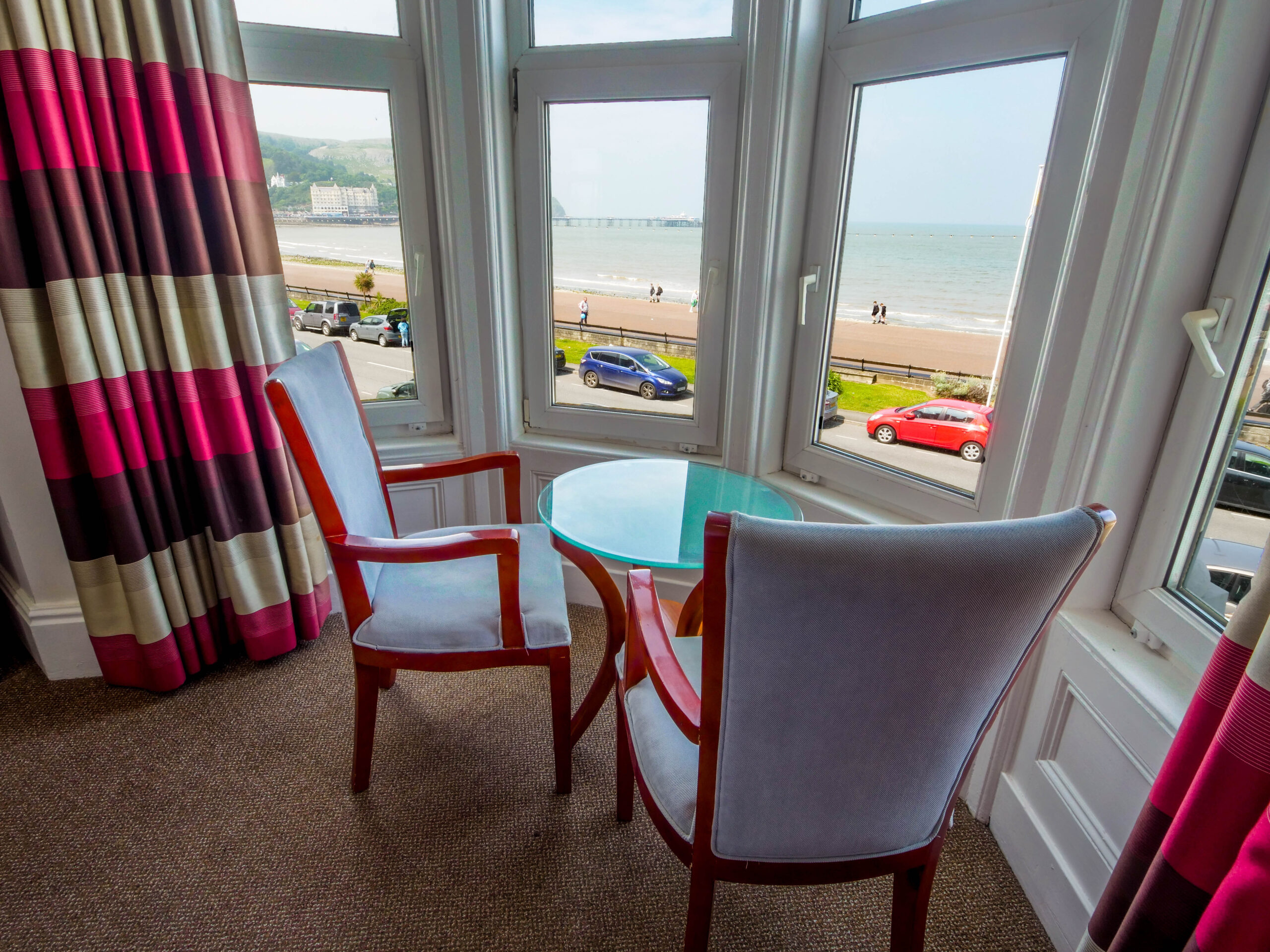
Ground floor or lift accessible rooms with genuine sea views are a third consideration worth raising directly with any hotel you contact, since in some older seafront buildings the ground floor or most accessible rooms were historically the last to be renovated and do not always retain the same sea views as upper floor rooms. This varies significantly between properties, so it is worth asking specifically rather than assuming an accessible room will automatically have the same view as the rest of the building.
The Kensington seafront hotel in llandudno is one option in the town that has a lift serving all floors and sits directly on the flat section of the promenade, which is worth knowing if accessible accommodation with genuine proximity to the seafront is a priority for your visit. As with any property, it is still worth confirming specific room details and entrance access directly with the hotel ahead of booking, since individual room configurations can vary within any building.
Planning a Realistic Visit
Given the combination of a flat, walkable town centre and a headland that can be experienced fully by road, tram, or cable car rather than requiring a climb, Llandudno is a genuinely realistic destination for a proper seaside break rather than a compromised version of one. The main planning considerations are confirming heritage transport accessibility in advance if the tram or cable car matter to your visit, checking tide times if beach access is important, since sand availability changes significantly with the tide, and confirming lift and step free access directly with accommodation rather than assuming based on general listings.
Why It Is Worth the Extra Planning
Few seaside resorts in the United Kingdom combine flat, walkable Victorian town planning with genuinely dramatic headland scenery that remains accessible by road, tram, or cable car rather than requiring a climb on foot. Llandudno’s origins as a single, deliberately planned Victorian resort rather than a town that grew up haphazardly over centuries are the underlying reason this combination exists at all. With a little planning around transport accessibility, tide times, and accommodation access, it holds up as one of the more genuinely realistic seaside breaks in Britain for visitors with mobility needs, rather than a destination that requires constant compromise.
