Llandudno's Great Beach
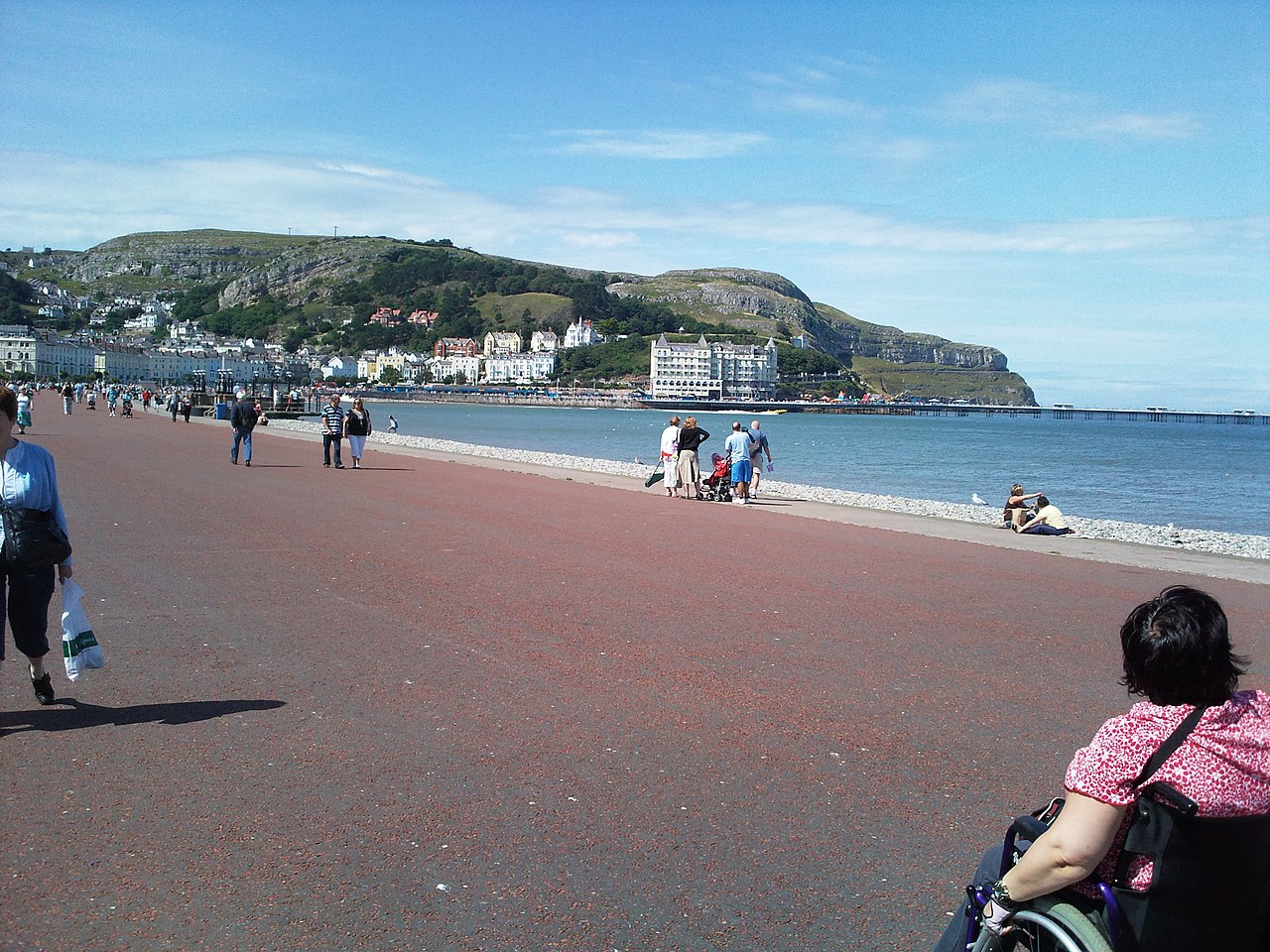
North Shore is Llandudno's main beach, and it is a magnificent one. The bay curves in a wide sweep from the base of the Great Orme headland at the western end to the Little Orme at the eastern end, a crescent of sand backed by the Victorian promenade and the terraced hotels and guest houses that give Llandudno its distinctive seaside character. On a sunny summer day, with the pier stretching out into the blue water and the Great Orme rising beyond the western end of the beach, the view is one of the most purely satisfying in British seaside life.
The beach is regularly monitored for water quality and has held Blue Flag status in the past, most recently in 2021, though — like every North Wales beach — it does not currently fly one. The sand is wide and relatively firm, good for walking and for families. The sea temperature in summer is suitable for swimming, though as with all exposed North Wales beaches it can be cool even in July and August. The beach shelves gradually and is generally safe for swimmers, but local conditions should always be checked, particularly if the wind has been onshore.
The Promenade
The Victorian promenade that runs behind North Shore Beach is one of the finest in Wales and one of the best-preserved in Britain. Stretching the full length of the beach, it was laid out as part of the planned Victorian development of Llandudno in the 1850s and 1860s, and the terrace of hotels and guest houses that lines it — many of them four and five storeys of ornate Victorian Gothic and Italianate architecture — survives almost intact. Walking the promenade is to walk through the aspirations of the Victorian middle class, made architectural in stone and stucco.
The promenade is wide enough to accommodate walkers, cyclists, and the horse-drawn carriages that still operate along it in summer. There are benches at regular intervals, and the view across the beach to the bay is consistently impressive. At the western end, the promenade terminates at the base of the Great Orme; at the eastern end, it leads to the pier entrance and the approach to Happy Valley and the cable car. The pier itself extends 2,295 feet from the promenade into the bay, and its ornate ironwork entrance pavilion is one of Llandudno's defining images.
Beach Facilities
North Shore Beach has the full range of facilities you would expect of a major seaside resort: beach huts available for hire, refreshment kiosks along the promenade, toilets and changing facilities. The town centre is immediately behind the promenade, putting cafes, restaurants and shops within a few minutes' walk of the sand. Ice cream is universally available and, in the way of seaside resorts, seems to taste better for the context.
The pier at the eastern end of the beach adds another dimension to a day on North Shore. Walking the 2,295 feet to the pier head, where Ocean's Bar serves Wild Horse Brewery ales with views across the bay, is one of those simple pleasures that make a British seaside town such a restorative place to spend a day. The Happy Valley gardens and miniature golf are a short walk from the pier entrance.
Practical Information
North Shore Beach is freely accessible at all times. Parking along the promenade is available but the extended Controlled Parking Zone means charges apply: in summer (May to September), promenade parking costs £5.50 for up to four hours and £7.50 for four hours or more. In winter (October to April), charges are lower and apply only between 10am and 4pm. The town centre car parks, a short walk from the beach, offer alternative options; full details are in the parking guide.
Dog restrictions apply on parts of North Shore Beach during the summer months. If you are visiting with a dog, West Shore Beach is the dog-friendly option and is equally beautiful in its own quieter way. The swimming guide covers the beaches in more detail for those planning to take to the water. The train station is within comfortable walking distance of the beach, making North Shore easily accessible without a car.
The Beach in Llandudno's History
The North Shore beach was central to the original Victorian vision for Llandudno. When the Mostyn estate developed the town from the 1850s onwards, the broad crescent of sand between the Great Orme and Little Orme headlands was the primary attraction that justified the investment. The promenade was built to run the full length of the beach, the grand hotels were positioned to face the sea, and the pier was extended into the bay to allow visitors to feel they were walking out over the water itself. The result — a mile of unbroken sandy beach backed by a Victorian promenade of exceptional quality — has survived into the 21st century largely intact. The Victorian pier, first opened in 1877, remains at the eastern end of the beach. The grand promenade hotels continue to line the seafront. The beach itself, still well maintained and regularly monitored for water quality, is as good as it was when the first Victorian tourists arrived by the newly extended railway line. What has changed is that the beach now has excellent modern facilities without having lost the character that makes it worth visiting in the first place.
 Day trips