A May Bank Holiday Like No Other
Every May Bank Holiday weekend, Llandudno hosts what is — by any honest measure — the finest free May Bank Holiday event in Wales. In fact, it is two events running simultaneously: the Llandudno Victorian Extravaganza, which takes over the promenade and town streets with free entertainment, steam engines, vintage fairground rides, and tens of thousands of people; and the Llandudno Transport Festival, which fills Bodafon Fields on the eastern edge of town with over 1,000 vintage and classic vehicles from across Britain. Together, they draw more than 200,000 visitors across the Saturday, Sunday and Monday of the bank holiday — to a town with a permanent population of 20,000.
The two events are distinct in character but work together seamlessly. The Extravaganza is free, rooted in the town's Victorian identity, and primarily about street spectacle. The Transport Festival charges a modest admission and is the largest event of its kind in Wales, drawing enthusiasts of vintage buses, steam traction engines, classic lorries, tractors, motorcycles and much more. A free vintage shuttle bus runs between the two sites throughout each day, and the vehicles from the Transport Festival regularly spill into the Extravaganza through the weekend's road runs and the Sunday parade.
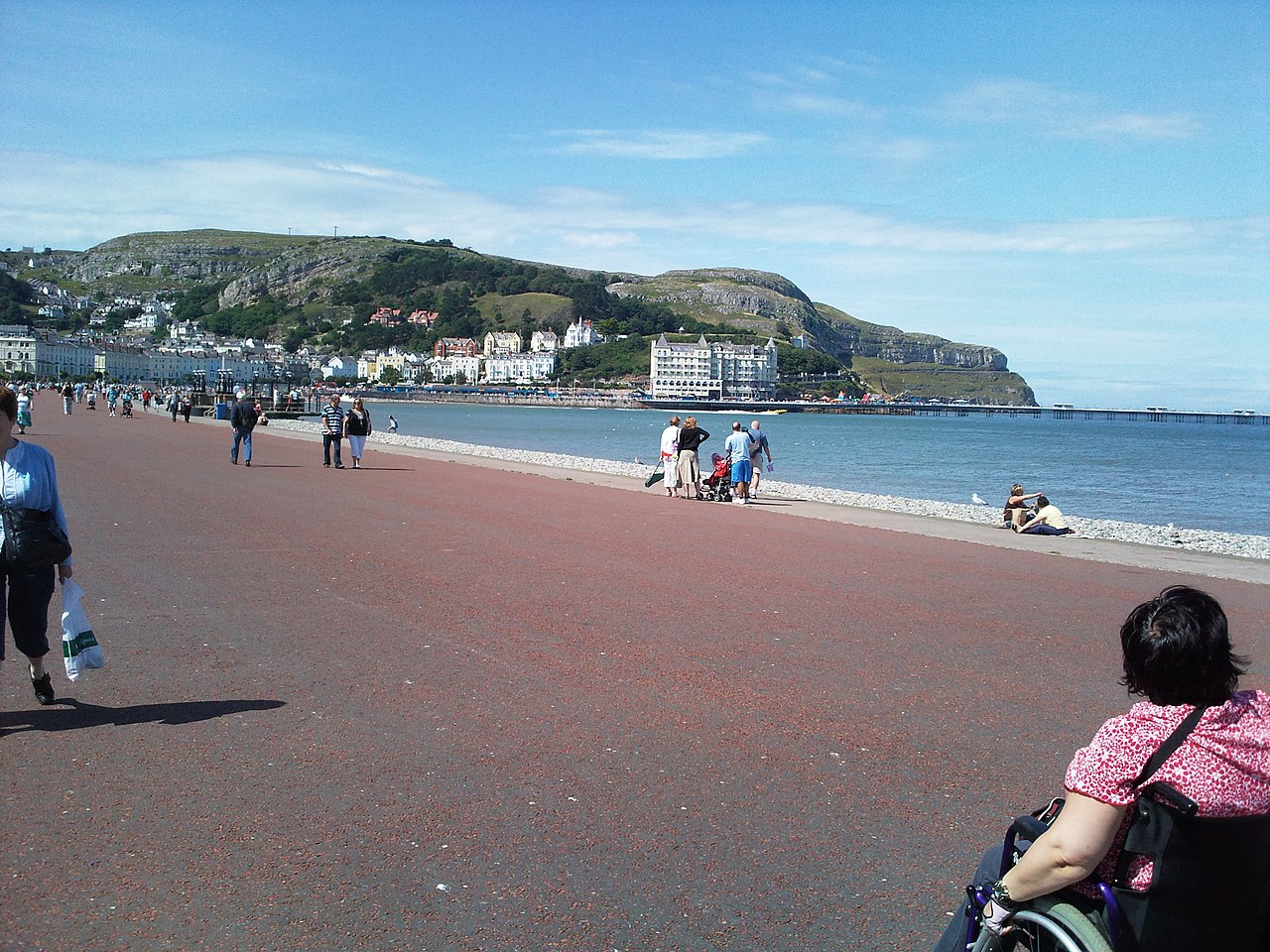
What makes the weekend work is the setting. Llandudno was purpose-built as a Victorian resort in the 1850s, and its broad promenade, grand hotels, pier, and limestone headlands provide a backdrop that no purpose-built festival site could replicate. The Victorian Extravaganza does not bring Victoriana to Llandudno — it reveals a town that was always Victorian to begin with.
The Victorian Extravaganza: Street Entertainment
The Extravaganza has been running since the mid-1980s — its 40th anniversary was celebrated in 2025 — and in that time it has developed a consistently high standard of street entertainment. The acts and performers vary year to year, but regular highlights include award-winning comedy magicians, illusionists and mind-readers, fire performers (fire-eating, fire-walking, walking on broken glass), circus skills workshops, acrobats, jugglers, stilt walkers, and Victorian-themed characters in period costume who roam the promenade interacting with crowds throughout the day.
In recent years the entertainment has included performers such as comedy magician Mario Morris; magical duo Andrew Van Buren and Allyson, who combine levitation, mind-reading and circus workshops; Dr Diablo, known for fire-eating and his unnerving habit of walking on broken glass; and balloon artist Lady Vee. These acts are not the entirety of the bill — there are dozens more across the three days — but they give a sense of the quality and range that the Extravaganza attracts.
The steam arena is a central feature across all three days: a dedicated area on the promenade where steam engines — traction engines, showman's engines and stationary steam machinery — are on display and, on occasion, in operation. For many visitors, particularly those who cross over from the Transport Festival by shuttle bus, the steam arena is the Extravaganza's single biggest draw.
The George Formby Society
One of the most distinctive and warmly anticipated regular features of the Extravaganza is the appearance of the George Formby Society, whose members perform a programme of Formby's music across the weekend. George Formby — the Lancashire entertainer and ukulele player who was Britain's biggest box-office star through the late 1930s and 1940s — had a particular association with the north of England and the seaside resort tradition, and his music remains genuinely popular rather than merely nostalgic. Society members typically perform in period costume, and their presence on the promenade draws a loyal following of Formby fans as well as many visitors who simply find themselves charmed by the enthusiasm and musicianship on display. It is one of those only-at-Llandudno experiences that resists easy description but is instantly appealing to almost everyone who encounters it.
The Sunday (and Monday) Parade
The centrepiece of the Extravaganza programme is the grand street parade, which takes place on Sunday and is repeated at midday on Monday. The parade circles the town and lasts the best part of an hour: a procession of walkers in period Victorian costume, cyclists on penny-farthings and vintage bicycles, marching bands, street entertainers, and — most spectacularly — traction engines from the Transport Festival field at Bodafon, which leave their showground and join the parade through the streets. The combination of a full brass band, a column of steam traction engines, and several thousand people lining Victorian streets in Victorian costume is the kind of spectacle that photographs poorly and lives on in memory for years.
For those attending the Transport Festival at Bodafon Fields on Sunday, the departure of the traction engines to join the parade is itself worth watching. The engines are driven the short distance from the field through the town, creating an impromptu street spectacle before the parade even formally begins. The repetition of the parade on Monday midday means that visitors who miss Sunday's run have a second chance — and Monday's tends to be slightly less crowded.
The Transport Festival: Bodafon Fields
The Llandudno Transport Festival has run since 1993, making it one of the more established events of its kind in Britain. It is held at Bodafon Fields (postcode LL30 1BW), a showground on the eastern edge of Llandudno with views across the bay and the Great Orme headland. Its scale is considerable: 1,000 or more individual exhibits across three days, drawn from collections and private owners across Wales, England and beyond.
The exhibits span the full width of transport heritage. Buses and coaches are particularly well-represented, with a long-standing association with the Crosville bus company and its surviving fleet — Sunday in particular sees the annual Crosville gathering, one of the most significant bus enthusiast events in the Welsh calendar. Agricultural vehicles include meticulously restored tractors from the mid-20th century, alongside ploughing engines and a wide range of farm machinery. Commercial vehicles — heavy haulage lorries, delivery vans, tankers — cover the golden age of British road freight. Classic cars and motorcycles cater for the broader enthusiast market. Stationary engines — Lister engines, Ruston & Hornsby engines, and others — run continuously on the field, providing a rhythmic mechanical soundtrack to the whole event. Autojumble stalls and trade stands complete the picture, making the field a productive destination for those looking for rare parts or period memorabilia.
Admission in 2026 was £10 for adults, £2 for children aged 4–14, and £2.50 for car parking. Payment was cash only at the gate, with no advance ticket sales — bring cash.
The Road Runs: Conwy and Marine Drive
The Transport Festival's two road runs are among the most spectacular free spectacles of the entire bank holiday weekend — and both are free to watch from the roadside.
The Saturday Road Run to Conwy departs Bodafon Fields at around 5–5.30pm on Saturday evening. A cavalcade of hundreds of vehicles — traction engines, vintage lorries, classic buses, motorcycles, cars, tractors — leaves the showground and follows a marshalled route via Llanrhos and Deganwy into the medieval town of Conwy. The highlight of the run is the passage through Conwy's medieval town walls and their famous tight archways, which the larger vehicles navigate with impressive precision. It is one of the more unusual sights in British transport heritage — Victorian and Edwardian machinery threading through a 13th-century fortification. The route then returns to the fields. Watching from the Conwy side, particularly at the walls, is strongly recommended.
The Sunday Road Run via Marine Drive follows on Sunday evening. The vehicles leave the showground and drive around Marine Drive, the toll road that circles the Great Orme headland above the sea. The halfway point at the Rest and Be Thankful café, perched on the headland with views across the Irish Sea, becomes a remarkable impromptu display of vintage transport against an extraordinary coastal backdrop. It is an unusual photo opportunity — one not easily replicated anywhere else in Wales.

Supercar Sunday
Sunday morning of the bank holiday weekend brings a striking counterpoint to the Victorian theme: Supercar Sunday on the promenade. Running typically from 9am to noon, the event fills the seafront with an array of modern high-performance and exotic cars — Ferraris, Lamborghinis, McLarens, Aston Martins, and occasional rare hypercars that rarely make public appearances. The contrast between the Victorian architectural backdrop and 21st-century engineering is genuinely arresting. Supercar Sunday is free to attend and is usually run as a charity event in support of St David's Hospice. The promenade in the morning, before the main Extravaganza crowds arrive, is the best time to see both the cars and the seafront at their most uncluttered.
A Day-by-Day Guide
Saturday is the first full day of both events. The Extravaganza opens on the promenade with street entertainers, the steam arena, vintage fairground rides, and the first wave of market stalls. At Bodafon Fields, the Transport Festival opens its gates and the exhibits begin to fill the field. In the late afternoon — usually around 5 to 5.30pm — the Saturday road run departs for Conwy. If you are going to watch one thing on Saturday, the road run through Conwy's walls is it. Head to Conwy before 5pm to get a position at the town walls.
Sunday is the busiest day and the most varied. It begins with Supercar Sunday on the promenade from 9am — arrive early for the best views and lightest crowds. From mid-morning onwards, both the Extravaganza and the Transport Festival are at full capacity. The Crosville bus gathering takes place on the field. In the afternoon, the parade departs — a full circuit of the town with traction engines, bands and costumed walkers lasting close to an hour. In the evening, the Marine Drive road run takes the vehicles around the Great Orme headland via the Rest and Be Thankful café. Sunday is long and full; pace yourself and use the shuttle bus rather than trying to walk between sites.
Monday is the closing day and often the most relaxed of the three. The parade repeats at midday, giving those who missed Sunday's run a second opportunity. The Transport Festival field is worth a final morning visit before vehicles begin to depart in the afternoon. The steam engines leave the field in convoy — a spectacle in itself. Road closures are lifted progressively through Monday afternoon as the event winds down.
Planning Your Visit
Accommodation: The Extravaganza draws over 200,000 visitors to a town of 20,000 across a single bank holiday weekend. Llandudno hotels and guest houses fill entirely, as do properties across the wider North Wales coast. If you want to stay in Llandudno for the Extravaganza, begin looking six months or more ahead — many regular visitors book the following year's accommodation before they leave. See the full accommodation guide for options across all property types. For budget flexibility, self-catering in or near the town gives independence and is worth considering. Note that parking for the Transport Festival costs £2.50 per day, cash only.
Getting there: Arriving by train is strongly recommended. Llandudno has its own station with direct services from Chester, Crewe and connections from Manchester and beyond — the journey from Chester takes around an hour. Parking in the town during the bank holiday is very limited and traffic on the approach roads can be heavy; the train eliminates both problems. The station is a short walk from the promenade.
Road closures: Significant parts of the town centre are closed to traffic throughout the weekend, including much of the Trinity Square and town hall area, and sections of Mostyn Street, Madoc Street and Vaughan Street. Closures take effect from the Thursday before the bank holiday in some areas. Check current road closure maps before driving into the town.
Practicalities: The Extravaganza itself is free; bring cash for rides, stalls, and food. The Transport Festival charges admission at the gate — cash only, no advance sales (£10 adults, £2 children 4–14, £2.50 parking in 2026). The free vintage shuttle bus between Bodafon Fields and the town centre runs from 10am each day and is the best way to move between sites. Come early in the morning on any of the three days for the most atmospheric experience and the lightest crowds; the promenade in the hour after opening, before the main visitor wave arrives, is Llandudno at its most striking.
History of the Extravaganza
The Victorian Extravaganza began in the mid-1980s as a community celebration of Llandudno's Victorian heritage and has grown steadily over four decades into one of the most important free events on the British seaside calendar. Its 40th anniversary in 2025 was marked with particular celebration. The Transport Festival, a separate but closely linked event, has run since 1993 and has grown into the largest transport event of its kind in Wales.
What is most remarkable about the Extravaganza's longevity is how little its essential character has changed. It remains free, family-centred, rooted in the Victorian identity of its host town, and organised with genuine community involvement alongside Conwy County Borough Council. In an era when many British seaside events have struggled for identity or drifted towards generic festival formats, Llandudno's Extravaganza has remained confident in what it is and why it matters. That confidence, expressed across four decades and counting, is one of the reasons 200,000 people keep coming back.
 Day trips